


Ear Problems and Equalising

Our ears are not only essential for hearing but also play a critical role in balance. Because of this, they require special attention during diving, as they are vulnerable to pressure-related injury if not properly managed.
All air spaces in the body respond to changes in ambient pressure underwater. When a diver equalises correctly during both descent and ascent, these spaces remain balanced. Failure to do so can result in barotrauma.
What is Barotrauma?
Barotrauma means injury caused by pressure:
baro = pressure
trauma = injury
In diving, barotrauma most commonly affects the ears due to the rapid change in pressure during descent—particularly within the first 4–5 metres, where pressure changes are most significant.
Anatomy of the Ear
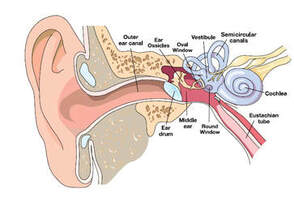
The ear is divided into three main sections:
-
External ear
-
Middle ear
-
Inner ear
Each plays a role in hearing and pressure regulation.
External Ear
The external ear consists of the auricle and ear canal. It collects sound and directs it inward.
The ear canal:
-
Curves inward approximately 24 mm in adults
-
Contains glands that produce earwax (cerumen)
-
Has sensitive skin that can become painful under pressure
Water and pressure in this area can cause discomfort or irritation.
Middle Ear
The middle ear is an air-filled cavity containing three small bones (ossicles):
-
Malleus (hammer)
-
Incus (anvil)
-
Stapes (stirrup)
The eardrum (tympanic membrane) separates the external and middle ear.
The Eustachian tubes connect the middle ear to the throat and allow pressure equalisation. These tubes are essential for safe diving, as they help maintain equal pressure on both sides of the eardrum.
Inner Ear
The inner ear is separated from the middle ear by the round and oval windows—two extremely delicate membranes.
Damage to these structures can result in:
-
Vertigo
-
Hearing loss
-
Tinnitus (ringing in the ears)
-
Severe nausea or vomiting underwater
Inner ear injury is particularly serious and may become dangerous in a diving environment.
Common Ear-Related Diving Injuries
Otitis Externa (Swimmer’s Ear)
An infection of the external ear canal caused by trapped moisture.
Symptoms:
-
Red, swollen ear canal
-
Itching and pain
-
Pain when touching the outer ear
-
Possible narrowing of the ear canal
Treatment:
-
Prevent moisture build-up where possible
-
Seek medical treatment if symptoms develop
-
Diving should stop until fully resolved
Middle Ear Barotrauma (Barotitis Media)
The most common diving-related ear injury.
Occurs when pressure in the middle ear is not equalised during descent.
Symptoms:
-
Ear fullness or pressure
-
Muffled hearing
-
Possible hearing loss
-
Fluid behind the eardrum
Treatment:
-
Stop diving immediately
-
Avoid flying or altitude changes
-
Seek medical assessment (ENT specialist if required)
-
Recovery may take days to weeks depending on severity
Inner Ear Barotrauma
Often caused by forceful or incorrect equalisation techniques.
Symptoms:
-
Severe vertigo
-
Vomiting
-
Sudden hearing loss
-
Loud tinnitus
Treatment:
-
Keep diver upright and still
-
Seek urgent specialist medical care
-
Must be differentiated from decompression illness
Tympanic Membrane (Eardrum) Rupture
A tear or perforation of the eardrum, which may occur even in shallow water.
Symptoms:
-
Ear pain (not always present)
-
Bleeding or fluid discharge
-
Hearing loss
-
Tinnitus
Treatment:
-
Stop diving immediately
-
Do not allow water into the ear
-
Do not use ear drops
-
Seek medical evaluation
External Ear Canal Vessel Rupture
More common in divers wearing tight hoods.
Symptoms:
-
Minor bleeding from ear canal
-
Blood on pillow or equipment later
Treatment:
-
Stop diving and seek medical advice
-
Rule out more serious injury
Prevention of Ear Injuries
Most pressure-related injuries are preventable with correct technique and awareness.
Key prevention points:
-
Equalise early and frequently during descent
-
Never force equalisation
-
Ascend slightly if equalisation is difficult
-
Do not dive with colds or congestion
-
Avoid routine use of decongestants to “enable diving”
-
Ensure hoods, masks, or equipment do not restrict ear function
-
Avoid earplugs
-
Keep warm before diving
-
Maintain good hydration and airway condition
-
Avoid irritants such as smoke or fumes before diving
If equalisation is consistently difficult, it is safer to end the dive than risk injury.
Equalising Techniques
The most commonly taught technique is the Valsalva manoeuvre:
Pinch nose and gently exhale.
However, this method does not actively open the Eustachian tubes—it simply forces air upward. If used too forcefully or too late, it may be ineffective and potentially harmful.
Key rule:
Always equalise gently and continuously, never forcefully.
Alternative equalisation techniques
Divers may also use:
-
Swallowing while pinching the nose
-
Jaw thrust forward movement
-
Jaw wiggling side to side
-
“K” sound technique (activates throat muscles)
-
Light alternating nostril equalisation techniques
Additional helpful actions:
-
Slight head tilting
-
Looking upward during descent
-
Gentle massage of the ear area
-
Mask removal and clearing if necessary
Final thoughts
Ear health is fundamental to safe diving. Most ear injuries are preventable and occur due to:
-
Delayed equalisation
-
Forceful equalisation
-
Diving while congested
Good technique, patience, and awareness are essential.
If it doesn’t equalise easily—stop, reassess, and do not force it.