




Compass and Accessories

Expert advice
Talk to divers who use the kit we sell.
Servicing and repairs
Regulators, cylinders, drysuits, BCDs and computer batteries.
Rutland dive centre
A real shop in Oakham, with training and pool sessions.
UK delivery
Posted across the UK. Ask about lead times on special orders.


Frequently asked questions
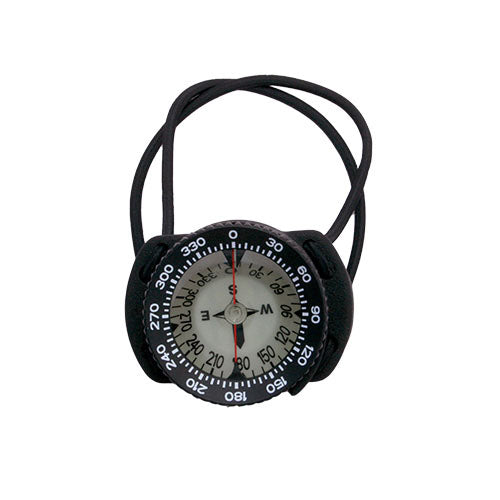
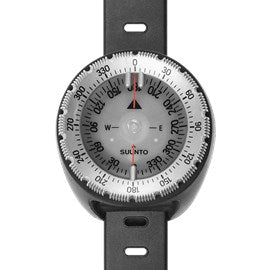
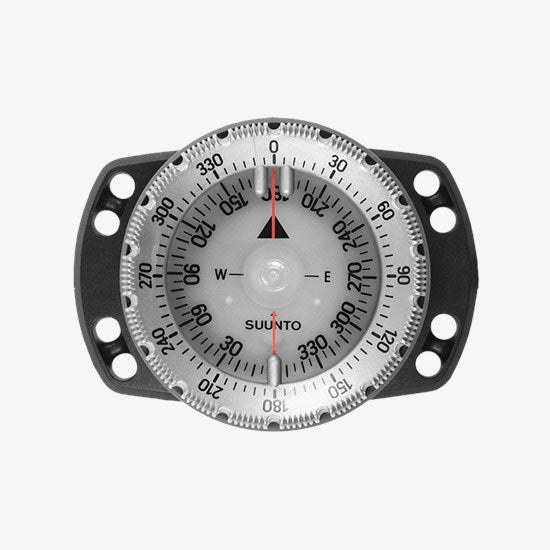
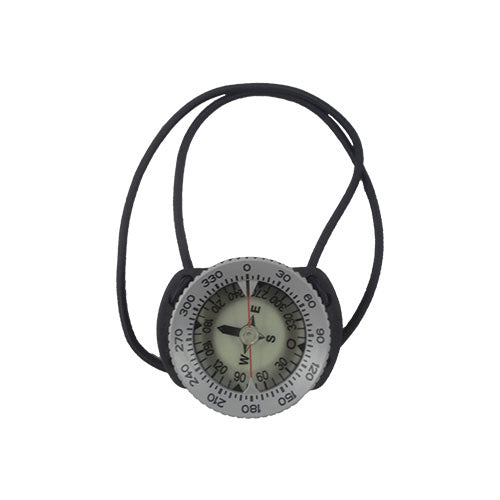
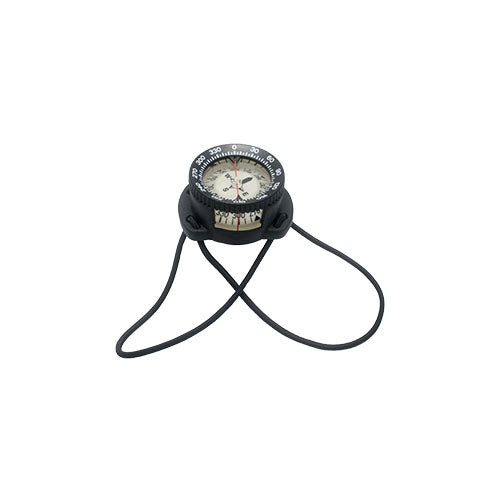
A bungee mount sits on the forearm over an exposure suit and is quick to bring in front of you. A strap mount does the same job with a conventional wrist strap. A console mount puts the compass alongside your contents gauge instead.
It comes down to how the rest of your kit is set up and which hand you want free. We stock all three and can show you the difference in the shop.
It comes down to how the rest of your kit is set up and which hand you want free. We stock all three and can show you the difference in the shop.
The Earth's magnetic field dips at a different angle depending where in the world you are, so analogue compass cards are balanced for a particular zone. NH indicates a compass balanced for the northern hemisphere.
A compass balanced for the wrong zone can tilt or read sluggishly. If you dive mainly in the UK, a northern-hemisphere compass is the one you want. Check the manufacturer specification if you are buying for travel further afield.
A compass balanced for the wrong zone can tilt or read sluggishly. If you dive mainly in the UK, a northern-hemisphere compass is the one you want. Check the manufacturer specification if you are buying for travel further afield.
On some models the degree figure describes how far the compass can be tilted away from level and still read freely.
It is a model characteristic rather than an industry standard, and it varies between manufacturers, so check the manufacturer specification for the compass you are considering rather than comparing the numbers across brands.
It is a model characteristic rather than an industry standard, and it varies between manufacturers, so check the manufacturer specification for the compass you are considering rather than comparing the numbers across brands.
Plenty of divers carry both. A digital compass depends on the computer's battery and on being calibrated. An analogue compass has nothing to power and can be read at a glance.
If you are doing navigation work, or diving somewhere that getting the direction wrong would matter, a backup is worth having. Which one you make primary is between you and your training.
If you are doing navigation work, or diving somewhere that getting the direction wrong would matter, a backup is worth having. Which one you make primary is between you and your training.