


Build leadership skills, gain structured training, and take your first step towards professional diving with Dive Rutland.
Becoming an SSI Divemaster is about more than achieving another certification.
It is the point where experienced recreational diving starts to become professional-level leadership.
You'll develop the knowledge, watermanship, rescue, planning and leadership skills needed to qualify as an SSI Divemaster and take your first step into professional diving.
But we also believe that qualifying is only the beginning.
A Divemaster is technically a professional dive guide. But a good Divemaster can be much more than someone who simply leads a dive.
They understand divers. They understand instructors. They understand how a dive team works. They can anticipate problems, support students, manage situations and become someone an instructor can rely upon.
That's why, once you've completed your Divemaster course, Dive Rutland offers the opportunity to continue your development through our post-course Divemaster internship.
The course gets you qualified.
The internship helps you learn the craft.
What it is:
A professional-level SSI Divemaster training course.
Who it is for:
Experienced divers ready to develop their leadership skills and move towards professional diving.
What you'll develop:
Dive planning, briefing, supervision, rescue, watermanship, leadership and professional awareness.
What happens after certification:
You can choose to continue your development with Dive Rutland through our post-course internship, working alongside instructors, real students and an in-water mentor.
The goal:
Not simply to give you another certification card, but to help you become a capable, dependable and professional Divemaster.
There comes a point in many divers' journeys when they want to do more than simply turn up and go diving.
Perhaps you want to:
The Divemaster course is the first major step into that professional environment.
You'll learn to look beyond your own dive and start considering the dive team, the other divers and the environment around you.
Once qualified, an SSI Divemaster can undertake professional dive leadership and guiding activities within the scope of their certification, experience and local regulations.
This can include:
The qualification can open opportunities in dive centres, resorts, liveaboards and other professional diving environments around the world, subject to local regulations, employer requirements and any additional qualifications required.
But the certification itself is only part of becoming a good professional.
Experience matters.
Not all Divemaster training feels the same.
Some divers are looking primarily for the certification. Others want to genuinely develop themselves as divers and future professionals.
At Dive Rutland, we take the second approach.
You'll have access to experienced diving professionals and an SSI Instructor Trainer, with structured training covering the academic, pool and open water elements of the Divemaster programme.
We also believe in continuing development after you qualify.
That's why our post-course internship gives you the opportunity to start gaining real-world experience alongside our instructors and students.
You won't simply be handed a list of jobs to complete.
You'll watch, do and demonstrate.
This course is designed to help you progress through the academic, practical, and supervisory elements needed for Divemaster-level development. Rather than just listing session counts, it helps to understand what each part is there to achieve.
| Training Element | What It Covers | Why It Matters |
|---|---|---|
| 1 Day of Academics | Dive leadership, dive management, general dive readiness, and UK legal considerations for working in the industry | Builds the knowledge base needed to supervise more confidently and understand the wider professional role |
| 2 Pool Sessions (minimum 4 hours) | Watermanship skills, 15-minute tread water, 375m swim, 25m underwater swim, full unconscious diver rescue, stress and rescue skills review | Develops control, stamina, rescue readiness, and confidence under assessment conditions |
| 3 Pool Skill Circuit Sessions | 1 skill demonstration session, 1 practice session, 1 final scoring session | Gives you time to learn, refine, and demonstrate skills rather than rushing the process |
| 3 Open Water Sessions | Guided dives planned, briefed, delivered, and debriefed by you, including Deep and Night Diving, with a minimum of five dives | Brings leadership into real diving situations where planning and control matter most |
Completing the training sessions is only part of becoming an SSI Divemaster. There are also a few additional requirements that need to be completed before your certification can be issued.
You will need to:
These requirements are part of the certification process and are separate from simply attending the scheduled Divemaster training sessions.
You won't be left to work out the professional requirements on your own.
As part of your Divemaster training, we'll explain what is required, help you understand the professional responsibilities that come with the certification, and make sure you know what needs to be completed before your Divemaster certification can be issued.
The aim is simple: you don't just finish the training — you finish knowing what it means to become a professional Divemaster.
Completing your SSI Divemaster course is a significant achievement.
But here's the reality:
You cannot learn everything about being a Divemaster from a course.
Professional judgement comes from experience.
Working with different divers. Watching instructors work. Seeing how students respond. Understanding what happens before and after the dive. Learning how a dive team operates.
That's why, after completing your Divemaster course, Dive Rutland offers the opportunity to undertake a post-course Divemaster internship.
This is not an alternative way to complete your certification.
You qualify first. Then you learn the craft.
Our approach is based around three stages.
Initially, you'll observe experienced instructors working with real students.
This can include:
You'll work alongside an instructor and an experienced in-water mentor, seeing how the different elements of a professional dive operation fit together.
The objective is simple:
Understand what good looks like before you're expected to do it yourself.
Once you've watched and understood the process, you start taking on the Divemaster role.
You'll work with real students and a real instructor, rather than simply practising scenarios with other Divemaster candidates.
Your in-water mentor will be there to support and guide you as you take on more responsibility.
You might initially undertake a role with close mentoring and supervision.
As your confidence, judgement and consistency develop, you'll take on more of the responsibilities yourself.
When you can demonstrate that you can perform the role consistently and appropriately, you'll be signed off for that area of experience.
Then you move on to the next challenge.
This isn't about racing through a checklist.
It's about demonstrating that you can be trusted to perform the role properly.
The progression is:
Watch it → Do it with support → Demonstrate competence → Sign off → Take on more responsibility
And, if all goes well, the ultimate progression is that you become the Divemaster working alongside the instructor and their students, with your mentor there to support your continued development.
This is where the post-course internship really differs from simply completing another qualification.
Working alongside real instructors and real students gives you the opportunity to experience these situations in a controlled and supportive environment.
Your in-water mentor is there to help you develop your judgement rather than simply tell you what to do.
The aim is to produce a Divemaster who doesn't just know what to do.
They understand why.
Important note
The real-world experience route requires an HSE medical.
To lead a dive, you need to hold the relevant speciality or be able to demonstrate at least five logged dives in that specialty area. For the Divemaster certification, the required specialties listed in the source material are:
For divers planning to work in the UK, a Drysuit Specialty is also needed if diving in a drysuit. Dive Rutland also advises the Enriched Air Specialty so you can use Nitrox on the Deep Specialty.
If you need help building the right package, you can explore related options here: View related training and specialty options.
If your goal is mainly skill development and professional progression, this course makes sense. If you are only looking for a simple recreational experience, a different course may be a better fit. For help choosing, see our course guide or contact us before booking.
To get the most value from Divemaster training, it helps to arrive with solid baseline skills and a willingness to practise. Dive Rutland recommends using time outside planned sessions to refine the skills circuit, helping you get more from the demonstration, practice, and final scoring sessions.
This course tends to suit divers who are coachable, consistent, and serious about developing standards rather than simply ticking off a certification.
| Requirement | Details |
|---|---|
| Minimum Age | 18 years |
| Certifications | Stress and Rescue or equivalent |
| Medical Clearance | HSE Diving Doctor sign-off mandatory for the intern route |
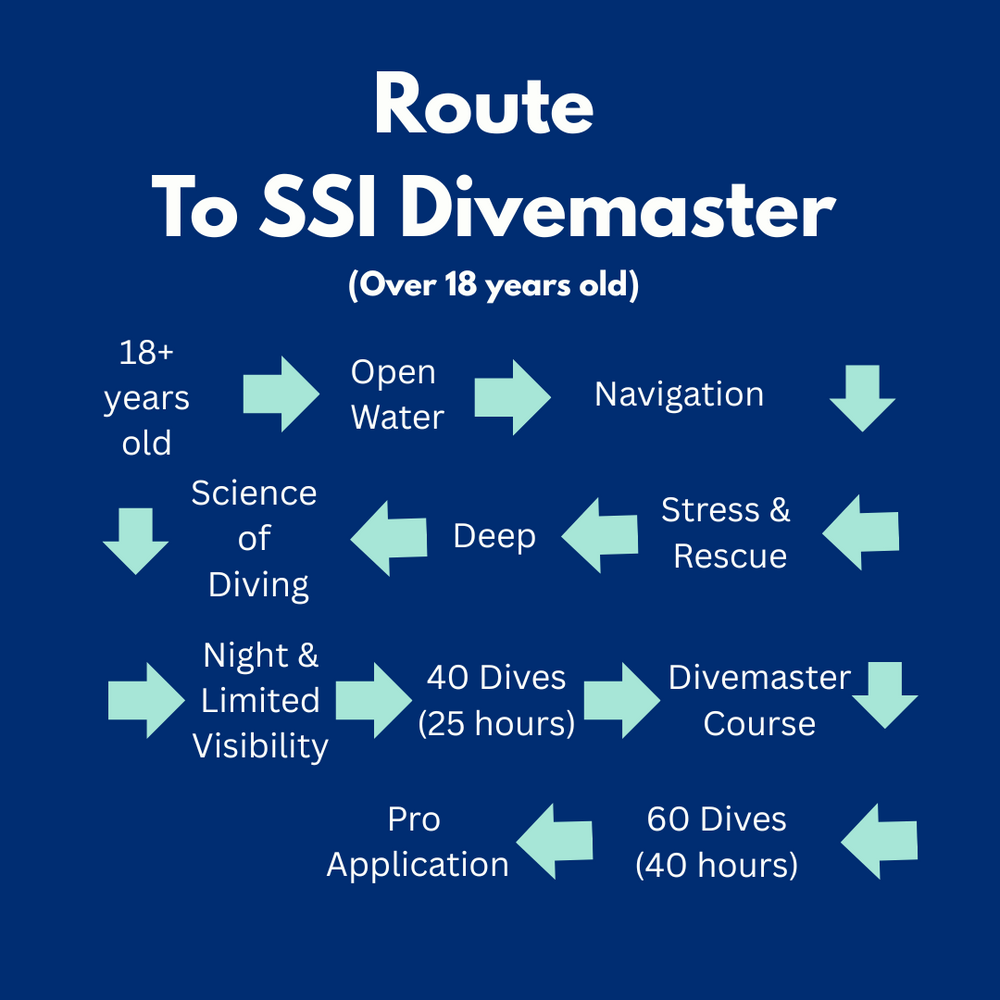
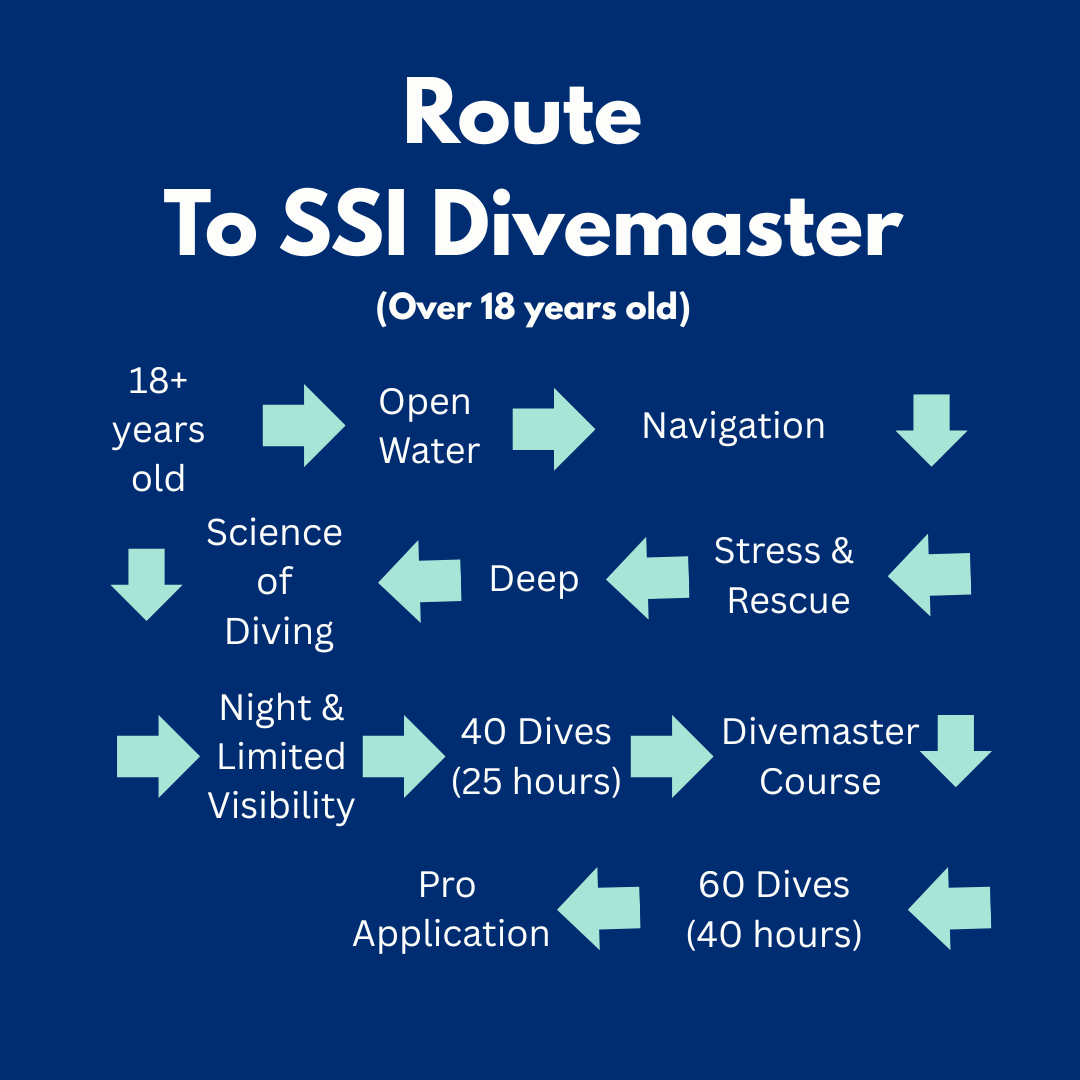
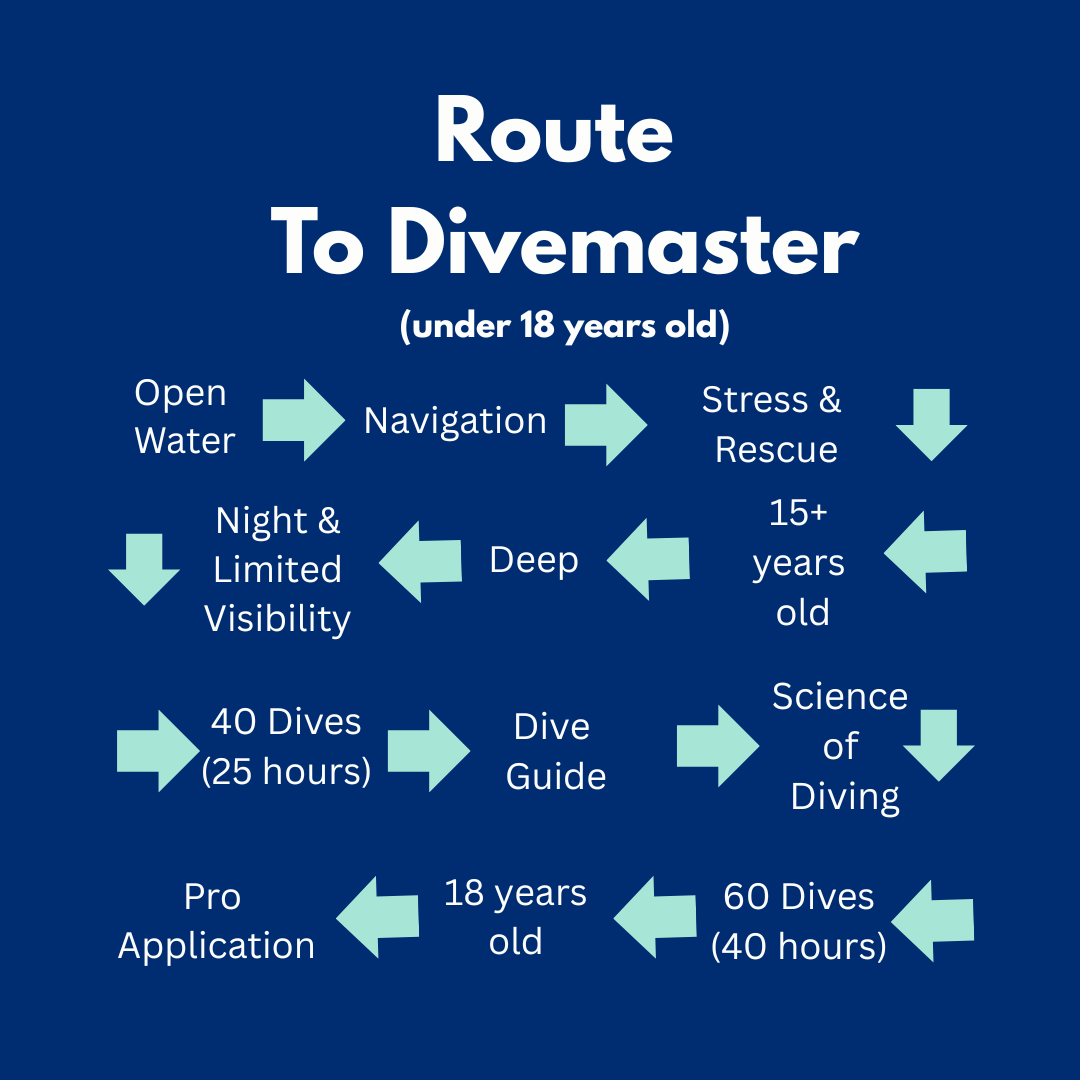
| Logged Dives | Minimum 40 logged dives (totalling 25 hours) to start, with 60 logged dives (totalling 40 hours or more) required to complete and be signed off on the course |
| Specialties | Deep Diving, Navigation, Science of Diving, Stress and Rescue, and Night Diving |
If you are still building your kit, Dive Rutland offers equipment packages, and hire equipment is available during the course.
You will need access to suitable scuba equipment and accessories for training. If you are unsure what you already have and what you still need, contact us before booking so we can help you choose the right option.
| Included | Not Included |
|---|---|
| All eLearning materials | Personal travel costs |
| Tea, coffee, and hot chocolate at the dive centre | Accommodation costs |
| Access to Dive Rutland’s Instructor Trainer and professional team | Entrance fees to training site |
| Structured mentoring and ongoing support | Hire of any equipment you do not have |
| Cylinders and air |
Many buyers comparing Divemaster courses are really asking a deeper question: “Will this actually prepare me, or just certify me?”
This course stands out through its combination of structure, mentoring, and optional real-world experience. It is designed for divers who want to be developed, not simply processed through a checklist.
Dive Rutland offers flexible training dates, including weekday and weekend options. If you already know your likely availability, it is worth getting in touch before booking so your preferred schedule can be discussed, although there also structured, published course dates.
For divers balancing work, travel plans, or other commitments, this flexibility can remove a major barrier to starting. If you need help choosing the right training route, equipment option, or related specialties, please contact us before ordering. If choosing the intern route, be prepared for an Enhanced CRB check, facilitated by Dive Rutland.
Yes. SSI Divemaster is a professional-level qualification and allows you to undertake professional dive leadership and guiding activities within the scope of your certification and applicable local regulations.
No.
Some people qualify because they want to work professionally. Others want the additional skills, experience and confidence that come with professional-level training.
No.
The internship is post-course experience. You first complete the SSI Divemaster course and become qualified. The internship then gives you an opportunity to gain real-world experience as a Divemaster.
No.
It is an opportunity for graduates who want to continue developing their practical experience with us.
You'll work alongside Dive Rutland instructors, real students and an experienced in-water mentor.
You'll observe different types of training before progressively taking on the Divemaster role yourself.
The process follows:
Watch → Do → Sign Off
Yes. The purpose of the internship is to gain real-world experience, so you'll work alongside instructors with actual students in pool and open water training environments.
The in-water mentor is an experienced Divemaster or professional who works alongside you as you develop your practical skills.
They provide guidance, feedback and support while the instructor remains responsible for the training activity.
As you demonstrate the required competence and consistency, you'll progressively take on more responsibility.
The aim is to develop you from someone watching the role into the Divemaster who can confidently undertake the role alongside the instructor.
You need at least 40 logged dives to start and 60 logged dives to complete and be signed off.
Yes. Divemaster can be an important step towards further professional development, including SSI Assistant Instructor and Instructor-level training, subject to the relevant SSI prerequisites.
For some divers, Divemaster is the destination.
For others, it's the beginning.
You might decide to:
Guide divers → Gain experience → Assistant Instructor → Instructor
Or you might use your Divemaster experience to work in dive centres, resorts, liveaboards or other professional diving environments.
You may even discover that you enjoy the teaching and mentoring side of diving and decide that becoming an instructor is where you want to go.
Whatever you decide, gaining experience matters.
Because there's a difference between being qualified to do something and becoming good at doing it.
If you're ready to move beyond recreational diving and develop your leadership skills, the SSI Divemaster course is where that journey starts.
And if you want to continue developing after qualification, Dive Rutland can offer the opportunity to gain real-world experience working alongside our instructors, students and professional team.
Ready to talk about your Divemaster journey?
COME DIVING
Our team of highly experienced instructors will be on hand to guide you through every step of the way, and to make sure you have a safe and enjoyable diving experience.