


Build leadership skills, gain structured training, and take your first step towards professional diving with Dive Rutland.
Becoming an SSI Divemaster is about more than achieving the next certification level. It is the point where experienced recreational diving starts to become professional-level leadership. If you want to guide certified divers, assist instructors, strengthen your dive CV, or prepare for future work in the industry, this course is designed to help you move forward with purpose.
The SSI Divemaster Course at Dive Rutland combines structured academics, pool work, open water training, and optional real-world experience alongside working dive professionals. It is built for divers who want more than theory alone. You will develop practical leadership skills, improve confidence in supervision and dive planning, and train in a UK diving environment where standards are taken seriously.
For divers who want to travel, work locally, or simply become a more capable and dependable diver, this is the first major step on the professional pathway.
What it is: A professional-level SSI Divemaster training course.
Who it is for: Experienced divers ready to move from recreational diving into leadership, supervision, and professional development.
Why it stands out: Structured training, UK-based dive leadership preparation, personalised mentoring, and an optional hands-on route with real students and real dive centre operations.
Best for: Divers who want practical development, not just a certification card.
Buyers in this category are not just looking for a course. They are looking for a credible next step that improves capability, opens options, and feels worth the commitment. That means the value is not only in the certification itself, but in what it helps you do next.
A Divemaster course is often chosen by divers who want to feel more capable, more employable, and more confident in the water. The structure here is designed to support all three, with practical sessions that help turn knowledge into usable skill.
Once certified, an SSI Divemaster can take on a range of professional and leadership-focused responsibilities. This is one of the biggest reasons divers choose this training. It creates more flexibility in how and where you use your diving experience.
Not all Divemaster training feels the same. Some buyers want a fast certification. Others want a course that genuinely develops them. This course is positioned for the second type of buyer, more so if you on completion of your Divemaster course you intern with us.
Dive Rutland offers a structured, hands-on programme designed to build leadership skills and confidence through real training rather than vague promises. You benefit from access to Dive Rutland’s professional team, a clear course structure, and mentoring throughout the journey.
There is also a practical advantage to training in the UK. Conditions are not always warm or easy, but that challenge can help produce adaptable, dependable divers with high standards and useful real-world experience.
If you are serious about becoming a capable dive leader, this course is built to give you structured development and practical support.
This course is designed to help you progress through the academic, practical, and supervisory elements needed for Divemaster-level development. Rather than just listing session counts, it helps to understand what each part is there to achieve.
| Training Element | What It Covers | Why It Matters |
|---|---|---|
| 1 Day of Academics | Dive leadership, dive management, general dive readiness, and UK legal considerations for working in the industry | Builds the knowledge base needed to supervise more confidently and understand the wider professional role |
| 2 Pool Sessions (minimum 4 hours) | Watermanship skills, 15-minute tread water, 375m swim, 25m underwater swim, full unconscious diver rescue, stress and rescue skills review | Develops control, stamina, rescue readiness, and confidence under assessment conditions |
| 3 Pool Skill Circuit Sessions | 1 skill demonstration session, 1 practice session, 1 final scoring session | Gives you time to learn, refine, and demonstrate skills rather than rushing the process |
| 3 Open Water Sessions | Guided dives planned, briefed, delivered, and debriefed by you, including Deep and Night Diving, with a minimum of five dives | Brings leadership into real diving situations where planning and control matter most |
For divers who want more than the core course, Dive Rutland offers a structured hands-on route that goes above and beyond the training outlined above. This is ideal for anyone who wants a better understanding of how a dive team actually works day to day.
During this route, you work alongside Dive Rutland professionals with real students in both pool and open water settings while undertaking the Certified Assistant role (after certification as a Divemaster and optional)
The real-world experience route requires an HSE medical.
To lead a dive, you need to hold the relevant speciality or be able to demonstrate at least five logged dives in that specialty area. For the Divemaster certification, the required specialties listed in the source material are:
For divers planning to work in the UK, a Drysuit Specialty is also needed if diving in a drysuit. Dive Rutland also advises the Enriched Air Specialty so you can use Nitrox on the Deep Specialty.
If you need help building the right package, you can explore related options here: View related training and specialty options.
If your goal is mainly skill development and professional progression, this course makes sense. If you are only looking for a simple recreational experience, a different course may be a better fit. For help choosing, see our course guide or contact us before booking.
To get the most value from Divemaster training, it helps to arrive with solid baseline skills and a willingness to practise. Dive Rutland recommends using time outside planned sessions to refine the skills circuit, helping you get more from the demonstration, practice, and final scoring sessions.
This course tends to suit divers who are coachable, consistent, and serious about developing standards rather than simply ticking off a certification.
| Requirement | Details |
|---|---|
| Minimum Age | 18 years |
| Certifications | Stress and Rescue or equivalent |
| Medical Clearance | HSE Diving Doctor sign-off mandatory for the intern route |
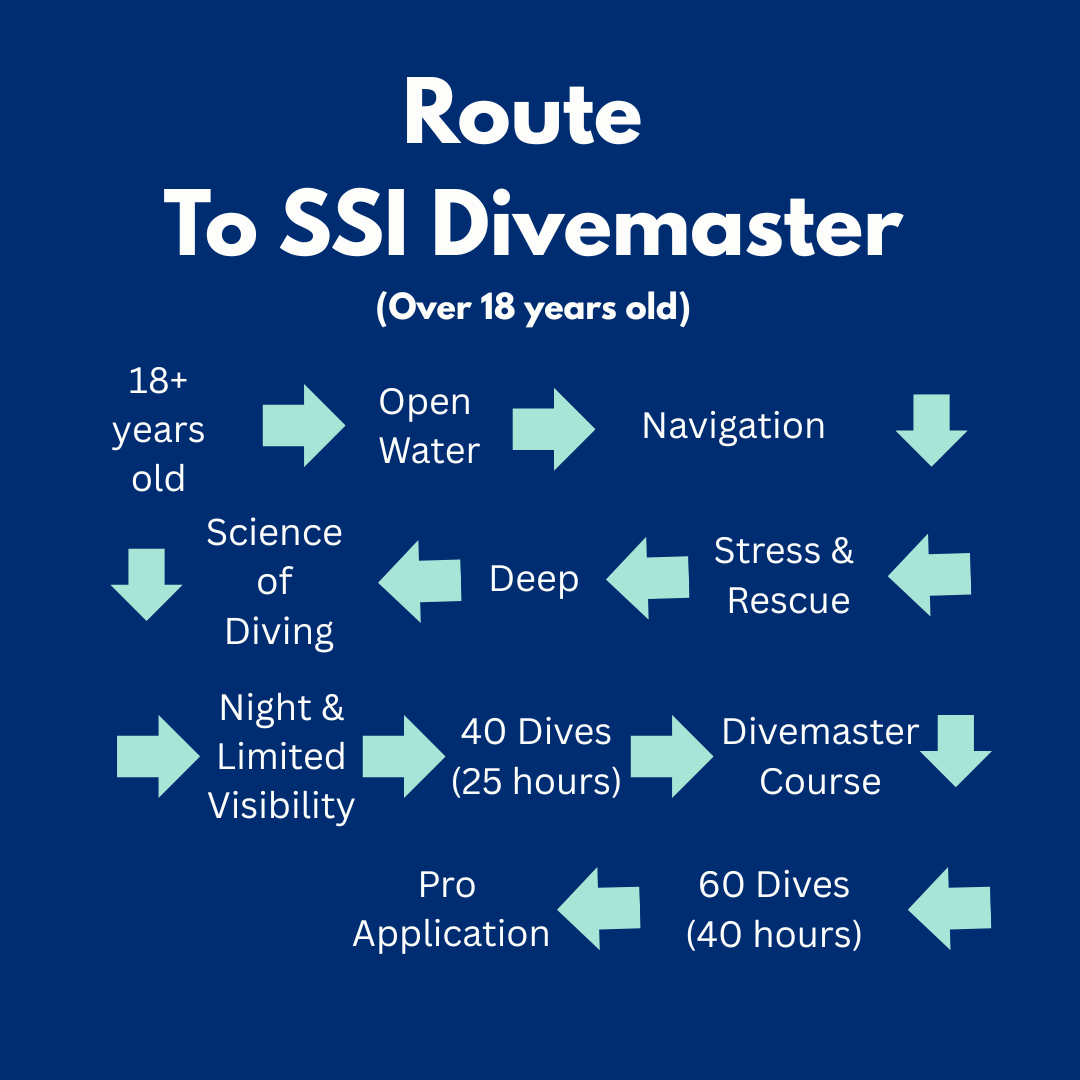
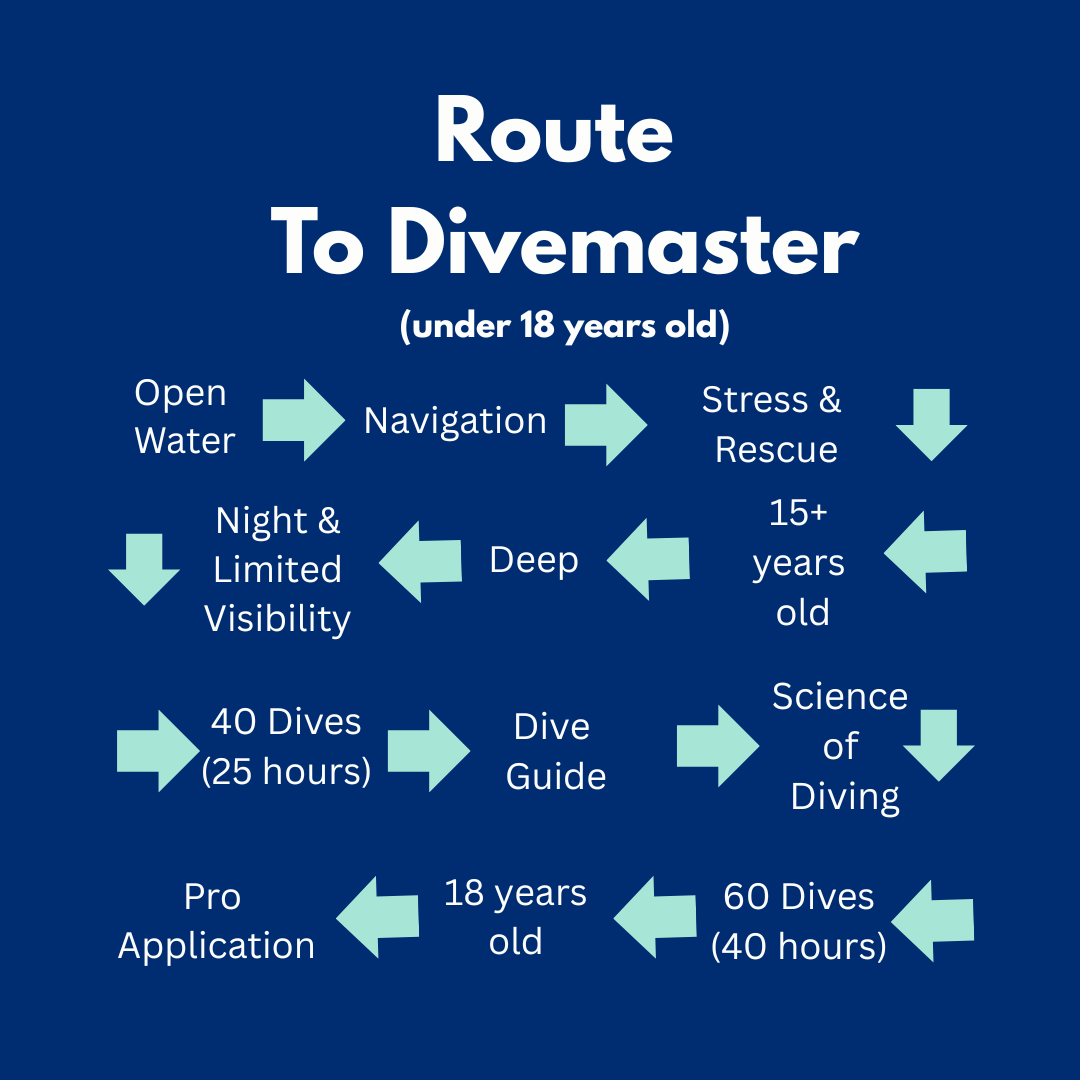
| Logged Dives | Minimum 40 logged dives to start, with 60 logged dives required to complete and be signed off on the course |
| Specialties | Deep Diving, Navigation, Science of Diving, Stress and Rescue, and Night Diving |
If you are still building your kit, Dive Rutland offers equipment packages, and hire equipment is available during the course.
You will need access to suitable scuba equipment and accessories for training. If you are unsure what you already have and what you still need, contact us before booking so we can help you choose the right option.
| Included | Not Included |
|---|---|
| All eLearning materials | Personal travel costs |
| Tea, coffee, and hot chocolate at the dive centre | Accommodation costs |
| Access to Dive Rutland’s Instructor Trainer and professional team | Entrance fees to training site |
| Structured mentoring and ongoing support | Hire of any equipment you do not have |
| Cylinders and air |
For intern-route candidates, you are treated as part of the team rather than given low-value tasks. That can matter if you are comparing hands-on development routes and want meaningful involvement.
This course includes structured training, mentoring, eLearning, cylinders, and air, so you can focus on building capability rather than piecing everything together yourself.
Many buyers comparing Divemaster courses are really asking a deeper question: “Will this actually prepare me, or just certify me?”
This course stands out through its combination of structure, mentoring, and optional real-world experience. It is designed for divers who want to be developed, not simply processed through a checklist.
Dive Rutland offers flexible training dates, including weekday and weekend options. If you already know your likely availability, it is worth getting in touch before booking so your preferred schedule can be discussed, although there also structured, published course dates.
For divers balancing work, travel plans, or other commitments, this flexibility can remove a major barrier to starting. If you need help choosing the right training route, equipment option, or related specialties, please contact us before ordering. If choosing the intern route, be prepared for an Enhanced CRB check, facilitated by Dive Rutland.
Yes. This course is positioned as the first major step in a professional diving journey, with progression into leadership, supervision, and future instructor-level pathways.
Yes. This suit divers who want additional skills but are not currently planning to work as a Divemaster or have a look at the SSI Dive Guide
You need a minimum of 40 logged dives to start, and 60 logged dives to complete the course and be signed off.
You need Deep Diving, Navigation, Science of Diving, Stress and Rescue, and Night Diving. For UK diving in a drysuit, a Drysuit Specialty is also needed if diving in a drysuit, and Enriched Air is advised.
The course includes all eLearning materials, refreshments at the dive centre, access to Dive Rutland’s Instructor Trainer and professional team, structured mentoring and support, and cylinders and air.
You should allow for personal travel and accommodation, training site entrance fees, and hire of any equipment you do not already have.
You need access to a full standard scuba setup and key accessories. Equipment packages and hire are available if you need support building your kit.
It is an additional structured hands-on experience where you work alongside Dive Rutland professionals with real students in pool and open water settings, gaining insight into operational and assistant-level responsibilities after certifying as a Divemaster
Yes, HSE Diving Doctor sign-off is mandatory for the intern route.
If you already have the required rescue-level background, logged dive experience, and specialty foundation, this course is the designed next step. It bridges the gap between capable diver and dependable dive leader.
The source material emphasises structured delivery, mentoring, and hands-on development. That is especially important for a professional-level course where confidence and judgement matter as much as theory.
The optional real-world route is valuable here. It gives insight into student support, site setup, surface support, and professional team workflows.
This course specifically references UK dive-centre realities and the standards expected in that environment, which may be attractive if you want practical preparation rather than destination-only assumptions.
You are expected to have a full standard scuba setup and key accessories, but equipment packages and hire options are available if needed.
For many buyers, the course purchase decision depends heavily on what comes next. This is not the end of a journey. It is the beginning of a wider professional pathway.
After qualifying as a Divemaster, you may choose to travel and work in diving environments around the world. Professionally, the next step can be becoming an SSI Assistant Instructor or progressing into an Instructor Training Course and then the Instructor Exam.
Being a Divemaster can contribute towards becoming a stunt person and registering on the British Stunt Register.
If you are planning your wider progression, you may also want to explore:
If you want structured training, practical development, and a recognised step into professional diving, this is the course to look at closely.
The SSI Divemaster Course is for divers who want more responsibility, more capability, and more options. It is not just about earning another certification. It is about preparing yourself to lead, support others, and step confidently into the professional side of diving.
If that sounds like the direction you want to take, now is the right time to start the conversation. Flexible weekday and weekend training options are available, and Dive Rutland can help you work through scheduling, equipment questions, specialties, and next steps.
With so much of the world covered in water, the opportunities are wide open. The real question is where you want your Divemaster journey to take you.
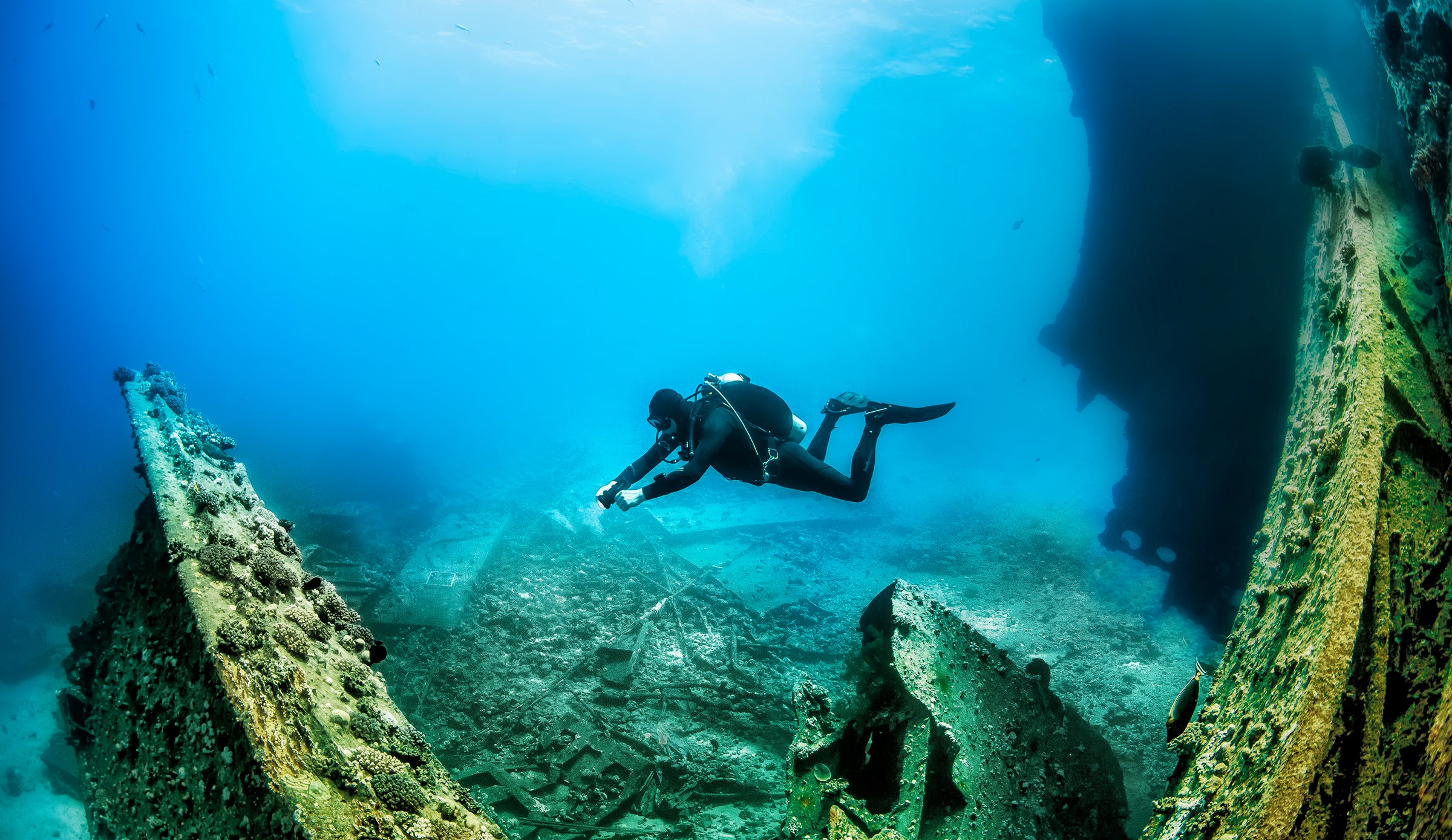
COME DIVING
Our team of highly experienced instructors will be on hand to guide you through every step of the way, and to make sure you have a safe and enjoyable diving experience.